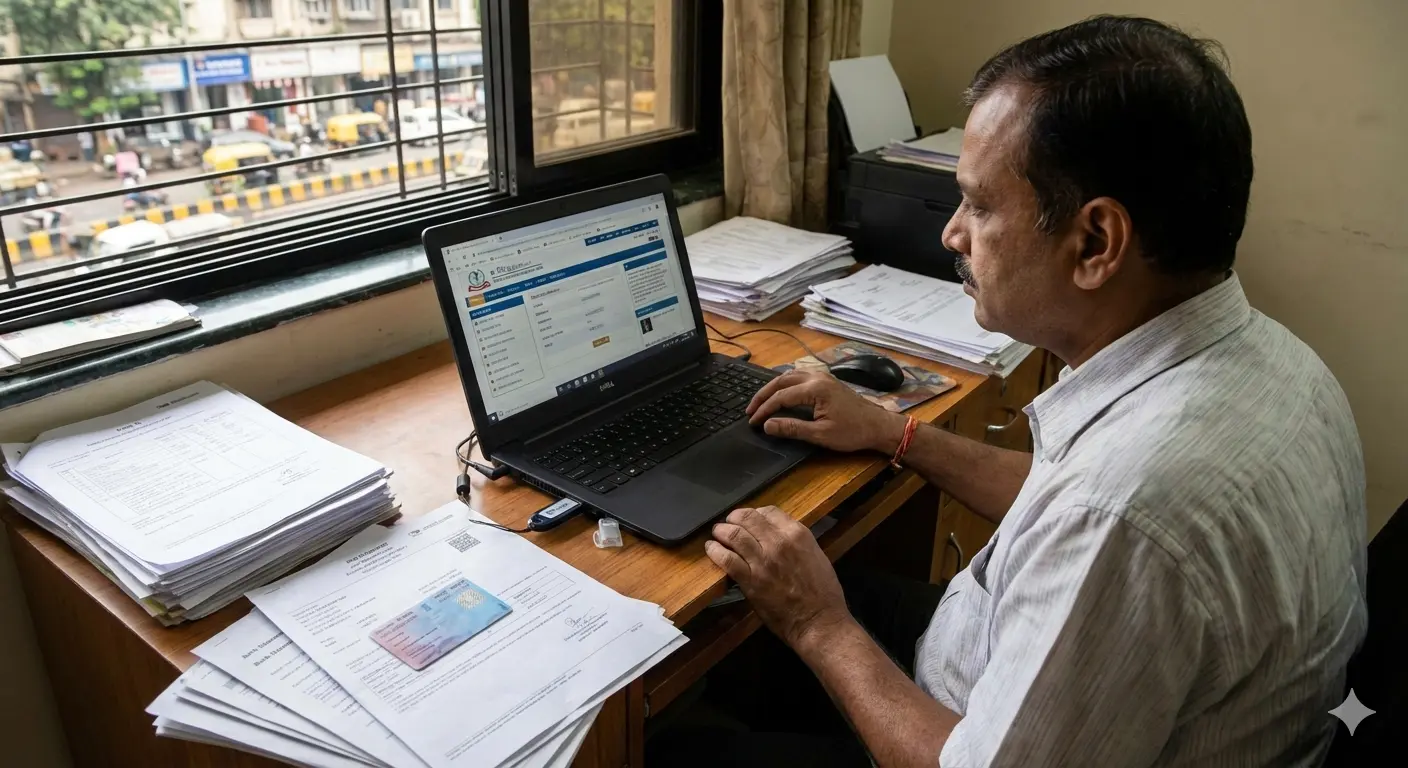

Filing your Income Tax Return (ITR) in India may seem complicated, but once you understand the steps, it becomes a straightforward annual process. Whether you are a salaried employee, freelancer, business owner, or first-time taxpayer, this guide will walk you through how to file your income tax return (ITR) step-by-step in India with clarity and confidence.
This article is designed to be a reference guide you can return to every year.
What Is Income Tax Return (ITR)?
An Income Tax Return (ITR) is a form where you declare your income, deductions, tax paid, and claim refunds (if any) to the Income Tax Department of India.
You file your ITR online through the official Income Tax e-Filing portal.
Who Should File ITR in India?
You must file an ITR if:
- Your total income exceeds the basic exemption limit
- You want to claim a tax refund
- You are self-employed, freelancer, or business owner
- You have foreign income or assets
- You want to carry forward losses
- You need income proof for loans, visas, or investments
Even if your income is below the exemption limit, filing ITR is considered a good financial habit.
Basic Documents Required to File ITR
Before starting, keep these ready:
- PAN card
- Aadhaar card
- Bank account details
- Form 16 (for salaried individuals)
- Form 26AS (tax credit statement)
- AIS & TIS (Annual Information Statement)
- Investment proofs (80C, 80D, etc.)
- Capital gains statements (if applicable)
Step-by-Step Process to File Income Tax Return Online in India
Step 1: Register or Login to the Income Tax e-Filing Portal
Visit the official portal and log in using your PAN as user ID.
If you are a first-time user:
- Click Register
- Enter PAN, personal details, and verify with OTP
Step 2: Choose the Correct ITR Form
Selecting the right form is crucial.
| ITR Form | Who Should Use It |
|---|---|
| ITR-1 | Salaried individuals with income up to ₹50 lakh |
| ITR-2 | Capital gains, foreign income |
| ITR-3 | Business/profession income |
| ITR-4 | Presumptive taxation |
Choosing the wrong ITR form can lead to rejection, so double-check.
Step 3: Download or Use Online Filing Mode
You can file ITR using:
- Online mode (recommended for beginners)
- Offline utility (Excel/JSON)
Most users should choose online filing for ease and auto-filled data.
Step 4: Verify Personal Details
Check and confirm:
- Name
- PAN
- Aadhaar
- Address
- Bank account details
Errors here can delay refunds.
Step 5: Review Auto-Filled Income Details
The portal auto-fetches income details from:
- Form 16
- Form 26AS
- AIS & TIS
Verify:
- Salary income
- Interest income
- Capital gains
- Other income sources
Always cross-check with your own records.
Step 6: Add Deductions and Exemptions
Claim deductions under sections like:
- Section 80C (PPF, ELSS, LIC, EPF)
- Section 80D (Health insurance)
- Section 80G (Donations)
- HRA, LTA (if applicable)
Correct deductions = lower tax liability.
Step 7: Compare Old vs New Tax Regime
The portal allows you to compare:
- Old tax regime (with deductions)
- New tax regime (lower rates, fewer deductions)
Choose the one that results in lower tax payable.
Step 8: Calculate Tax Payable or Refund
The system automatically calculates:
- Total tax liability
- Taxes already paid
- Refund or additional tax payable
If tax is payable:
- Pay online using Challan 280
Step 9: Submit the ITR
Once everything is verified:
- Click Submit
- Note the Acknowledgement Number
Step 10: Verify Your ITR (Most Important Step)
Your ITR is NOT complete until verified.
You can verify using:
- Aadhaar OTP (fastest)
- Net banking
- Demat account
- Physical ITR-V (post to CPC Bengaluru)
Verification must be done within 30 days.
After Filing ITR: What Happens Next?
- ITR is processed by CPC
- Refund (if any) is credited to your bank account
- You can track status under “View Filed Returns”
Common Mistakes to Avoid While Filing ITR
- Selecting wrong ITR form
- Not reporting interest income
- Skipping ITR verification
- Ignoring AIS mismatches
- Filing after due date (penalties apply)
Benefits of Filing Income Tax Return in India
- Easy loan & visa approvals
- Claim refunds
- Avoid penalties & notices
- Build financial credibility
- Carry forward losses
Frequently Asked Questions (FAQs)
Is filing ITR mandatory for everyone?
No, but highly recommended even if income is below taxable limit.
What is the due date for filing ITR in India?
Usually 31st July (subject to government extension).
Can I revise my ITR after filing?
Yes, you can file a revised return if you made mistakes.
Final Thoughts: Make ITR Filing a Habit, Not a Headache
Once you file your ITR a couple of times, it becomes routine. With the government improving automation and pre-filled data, online ITR filing in India is now simpler than ever.