
Body language is the first language we ever learn. Before we spoke our first words, we communicated through facial expressions, touch, posture, and tone. Even as adults, these non-verbal cues continue to convey more emotional truth than our words ever can. Understanding body language means understanding the hidden layer of communication happening in every conversation.
What Body Language Really Is
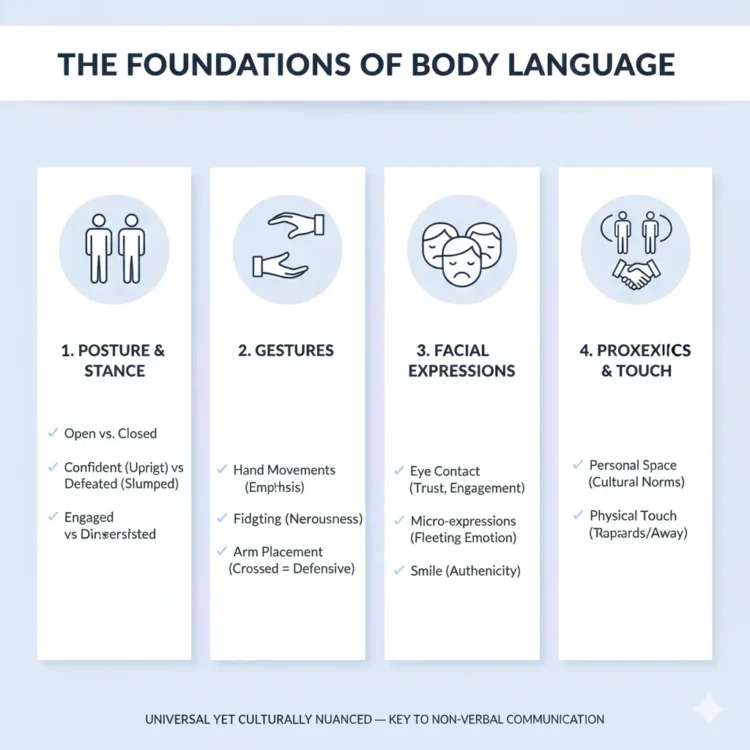
Body language includes all the non-verbal cues we use to express emotions and intentions:
- Facial expressions
- Gestures
- Posture
- Eye contact
- Touch
- Proximity
- Vocal tone and pace
These cues work together to create an emotional message behind your words. If your verbal and non-verbal messages conflict, people believe the body—always.
Why Body Language Overrides Words
We’re wired to trust physical cues more than verbal ones because they’re harder to fake. If someone says, “I’m okay,” while avoiding eye contact, crossing their arms, and speaking in a flat tone, you don’t believe the words.
This clash—called incongruence—reveals hidden emotions. The body leaks the truth even when the mind tries to hide it.
The Evolution Behind Body Language
Long before humans had structured language, we communicated danger, safety, attraction, and threat through movement and expression.
Examples:
- Widened eyes increased field of vision in fear
- Open palms signaled no weapons
- Raised eyebrows signaled surprise or curiosity
- Leaning forward showed interest
These ancient signals still influence modern communication. That’s why someone leaning away feels distant or insecure even if they’re being polite.
Real-Life Situations Where Body Language Matters Most
Job Interviews
Recruiters form impressions within seconds. Confident posture, a steady walk, and calm eye contact can matter more than your résumé.
Meetings & Negotiations
A client may say, “Yes,” but tight lips, rigid posture, or crossed arms reveal hesitation.
Relationships
A partner may verbally agree but physically withdraw. The body always reveals unmet needs.
Parenting
Children express emotions through their face and posture long before they develop emotional vocabulary.
Myths About Body Language (And the Truth)
MYTH 1: “93% of communication is body language.”
False.
This number applies only when people talk about emotions and their words are unclear. Words still matter—but when feelings are involved, people look to the body for truth.
MYTH 2: “Crossed arms always means defensiveness.”
Also false.
Crossed arms can mean:
- Comfort
- Warmth
- Habit
- Thinking
- Fatigue
Never judge a single cue alone. Always look for clusters.
MYTH 3: “Avoiding eye contact means lying.
No.
People avoid eye contact for many reasons: shyness, autism, anxiety, or cultural norms.
Many liars actually overuse eye contact to appear honest.
Practical Ways to Use Body Language Today
✔ Improve rapport
Use open palms, warm eye contact, and relaxed posture.
✔ Detect emotional shifts
Watch for sudden changes—lip compression, shoulder tension, or increased fidgeting.
✔ Strengthen confidence
Taking deep breaths, relaxing your shoulders, and standing tall signals confidence to others—and to your own brain.
✔ Avoid misunderstandings
When comforting someone, turn your body fully toward them and soften your tone.
Conclusion
Body language is not a trick or a tool to manipulate others. It’s the honest emotional layer beneath every conversation. When you become aware of these cues—your own and others’—you unlock a deeper, more accurate understanding of human communication.