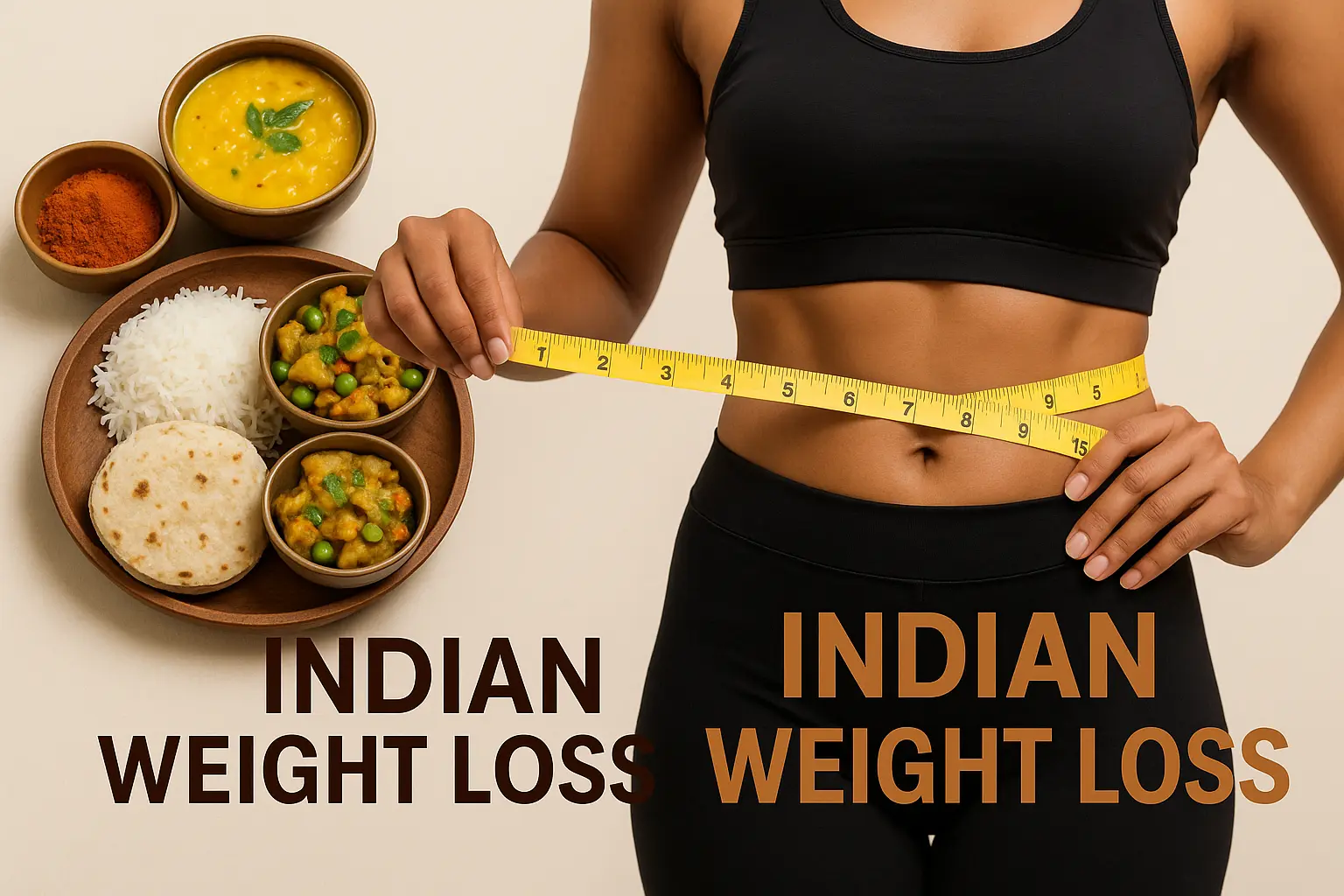

Most Indians struggle with weight loss for the same reason: a mix of genetics, slow metabolism patterns, high-carb diets, irregular eating habits, and long sitting hours. This guide explains how the Indian body type responds to food, what to avoid, what to eat more of, and how to build a simple, realistic, sustainable weight loss plan.
Weight loss works differently for Indians because our genetics and food culture shape how our bodies store and burn fat. The Indian body type naturally holds more belly fat, has lower muscle mass, and is more prone to insulin resistance when compared to many other populations. Add to this our strong dependence on rice, rotis, sugar, and chai — plus sedentary workdays filled with long screen hours — and we have a combination that makes fat gain easier. Family-style meals and social eating patterns also encourage overeating without us even realising it.
But the solution doesn’t lie in adopting Western diets. What we truly need is a balanced Indian diet that works with our metabolism, not against it.
To understand this better, let’s look at how the Indian body typically behaves. Many Indians gain fat faster even when calorie intake is not excessively high. Carbohydrate-heavy meals create sharper blood sugar spikes, making the body store more fat. During crash diets, we tend to lose muscle much more quickly, which slows metabolism further. There’s also a higher risk of cholesterol issues and prediabetes, even among people who don’t look overweight.
Our everyday habits make things worse — long commutes, long hours of sitting, rice or roti in almost every meal, multiple cups of sugary tea, weekend overeating, festival food, and late-night dinners often past 10 PM. Recognising these patterns is the first step toward building a plan that genuinely works.
The core principles of an Indian weight-loss diet are actually simple. You don’t have to skip meals. The key is portion balance: half your plate should be vegetables, a quarter protein, and a quarter complex carbs. This small shift alone can drop 200 to 300 calories a day without leaving you hungry.
Protein intake is another major gap. Most Indians barely get 40 grams a day, when the body actually needs around 60 to 90 grams for effective fat loss. Higher protein reduces cravings, keeps you full longer, maintains muscle, and boosts metabolism.
Then comes the “big four” — sugary chai, deep-fried snacks, maida-based foods, and excess wheat and rice. These slow fat loss dramatically and need to be reduced for meaningful progress. Meal timing also plays a huge role. Eating late is one of the biggest triggers for fat storage in Indian bodies. Finishing dinner two to three hours before sleep and allowing a 12–14 hour overnight fast aligns perfectly with our metabolic patterns.
When it comes to what you should eat, Indian households already have everything needed for fat loss. Protein sources like dal, rajma, chole, paneer, tofu, eggs, Greek yogurt, chicken, fish, and sprouts work beautifully. In fact, combining plant proteins improves amino acid balance naturally.
For carbs, millets such as ragi, bajra, and jowar are excellent alternatives to wheat. Brown or red rice, rolled oats, sweet potatoes, barley, and quinoa provide slow-releasing energy that keeps you full. Healthy fats like a teaspoon of ghee, nuts, seeds, and cold-pressed oils support metabolism instead of slowing it. Vegetables such as lauki, tinda, beans, broccoli, cabbage, spinach, cucumber, carrots, and methi help reduce cravings and keep digestion smooth because of their high fibre content.
To speed up fat loss, it’s equally important to avoid foods that commonly hold Indians back. Digestive biscuits, namkeen, bhujia, oily parathas, naan, kulcha, bhatura, sugary tea or coffee, packaged juices, evening fried snacks, and heavy late-night dinners all slow your progress. These habits increase calorie intake without providing any nutrition, making fat loss much harder than it needs to be.
Common Weight Loss Mistakes Indians Make
- Drinking 3–4 sugary chais daily
- Overeating “healthy” nuts and ghee
- Too many rotis at dinner
- Only walking and avoiding strength training
- Crash diets that cause hair fall and muscle loss
- Weekend bingeing undoing weekday discipline
What Results to Expect
- 2–4 kg fat loss per month
- Visible inch loss in 3–5 weeks
- Reduced bloating
- Better sleep and energy
- Improved digestion
Slow, steady fat loss is sustainable. Fast loss comes back quickly.